Snakes in Ancient Egypt
Although deaths from snake bites are
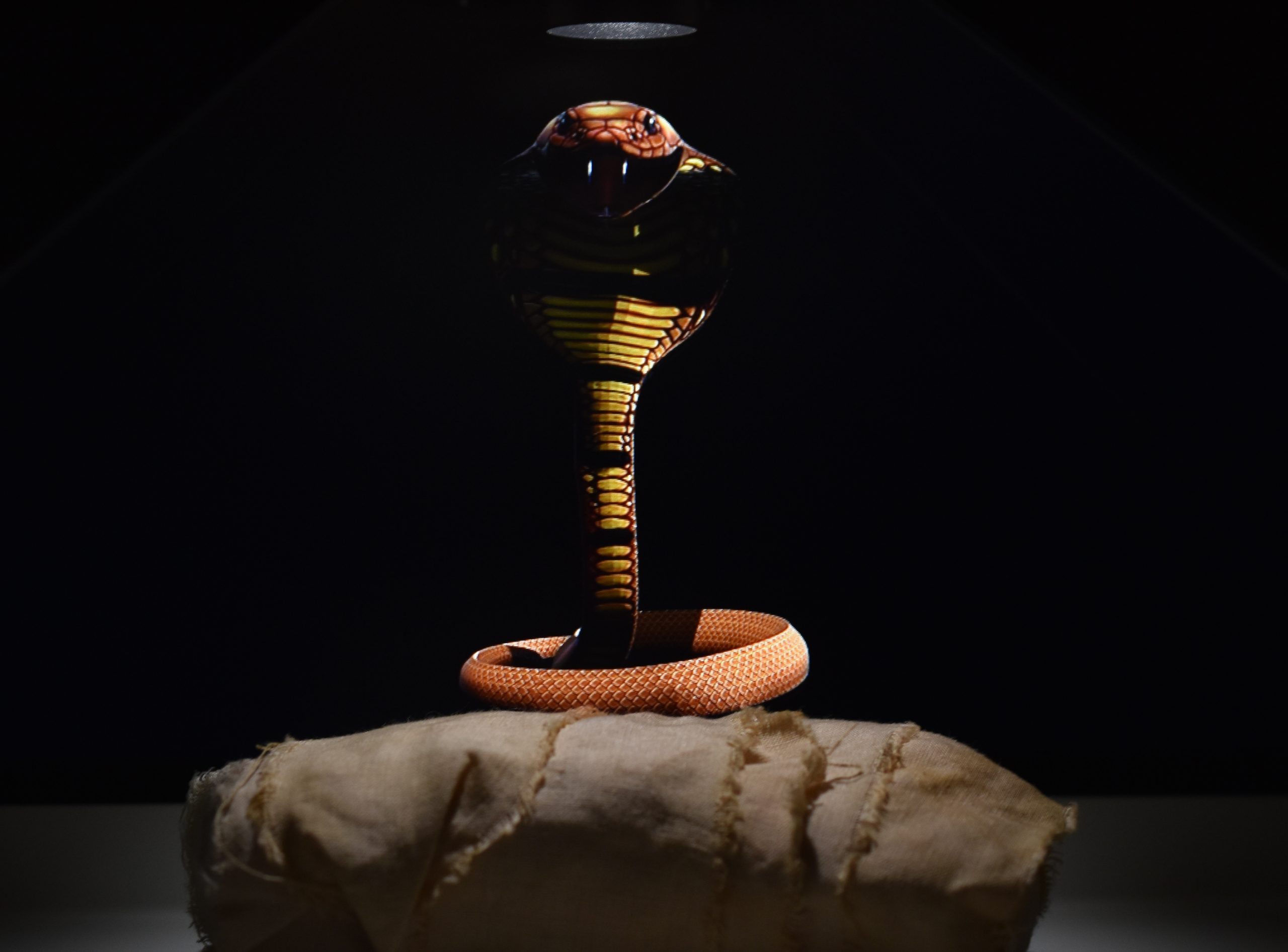
rare in Egypt a number do occur. Among the venomous snakes are the Black-necked
spitting cobra (Naja mossambica pallida) which can spray poisonous venom
three meters into the eyes and leave the victim permanently blinded. There is
also the Egyptian Cobra (Naja haje haje) which is more than two meters in
length and the smaller horned viper (Cerastes sp.).
The gigantic African Rock Python (Python sebae)
which was present in the Predynastic Period is no longer found in the country.
Ivory knife handles sometimes show intertwined pairs of this snake under an
elephant. Whether the elephant was depicted as trampling the snake or working
with the snake is debatable. Houlihan (1996, 172-173) believes the elephant is
attacking the snake, an idea reinforced by the legend that African Rock Pythons
were enemies of the African elephant. Johnson (1990, 40-41) however, believes
that the snakes are supporting and defending the elephants.
There are a large number of ancient
Egyptian texts which were designed to act against snakes. Spell
33 of the Book of the Dead, for example, states that, in order to drive
off a serpent, the the following should be recited: ‘Oh snake, take yourself
off, for Geb protects me; get up, for you have eaten a mouse, which Re detests,
and you have chewed the bones of a putrid cat.’ The archenemy of the
sun-god Re, Apophis, took the form of a snake, and at midday threatens the
voyage of the god through the otherworld. He is however defeated and Re goes on
his way. In the Coffin Texts and the Book of the Dead a snake is
mentioned who is part made of flint. This snake is identified as Apophis.
Dangerous snakes are shown as being cut up or otherwise mutilated. In early
Egyptain tombs, even snake hieroglyphs were shown cut by knives lest the
representation be made living and harm the deceased. In Egyptian spell books,
snakes are often killed using a flint knife.
Despite the fact that many snakes were obviously harmful the Egyptians did not think of all snakes as bad. Indeed, many protective gods and goddesses could take the form of snakes, for example Renenutet and Merseger. Meretseger protected the Theban necropolis and Renenutet was a guardian of the king and also a protector of the harvest. The downstairs gallery has a large stela with two snakes entwined. They represent Isis-Thermouthis and Serapis (Serapis is the bearded one on the right). Isis was the consort of Serapis, and the two came to embody the forces of male and female fertility. They are sometimes represented on door-jambs as human-headed serpents.
The Centre also has protective amulets in the form of snakes.
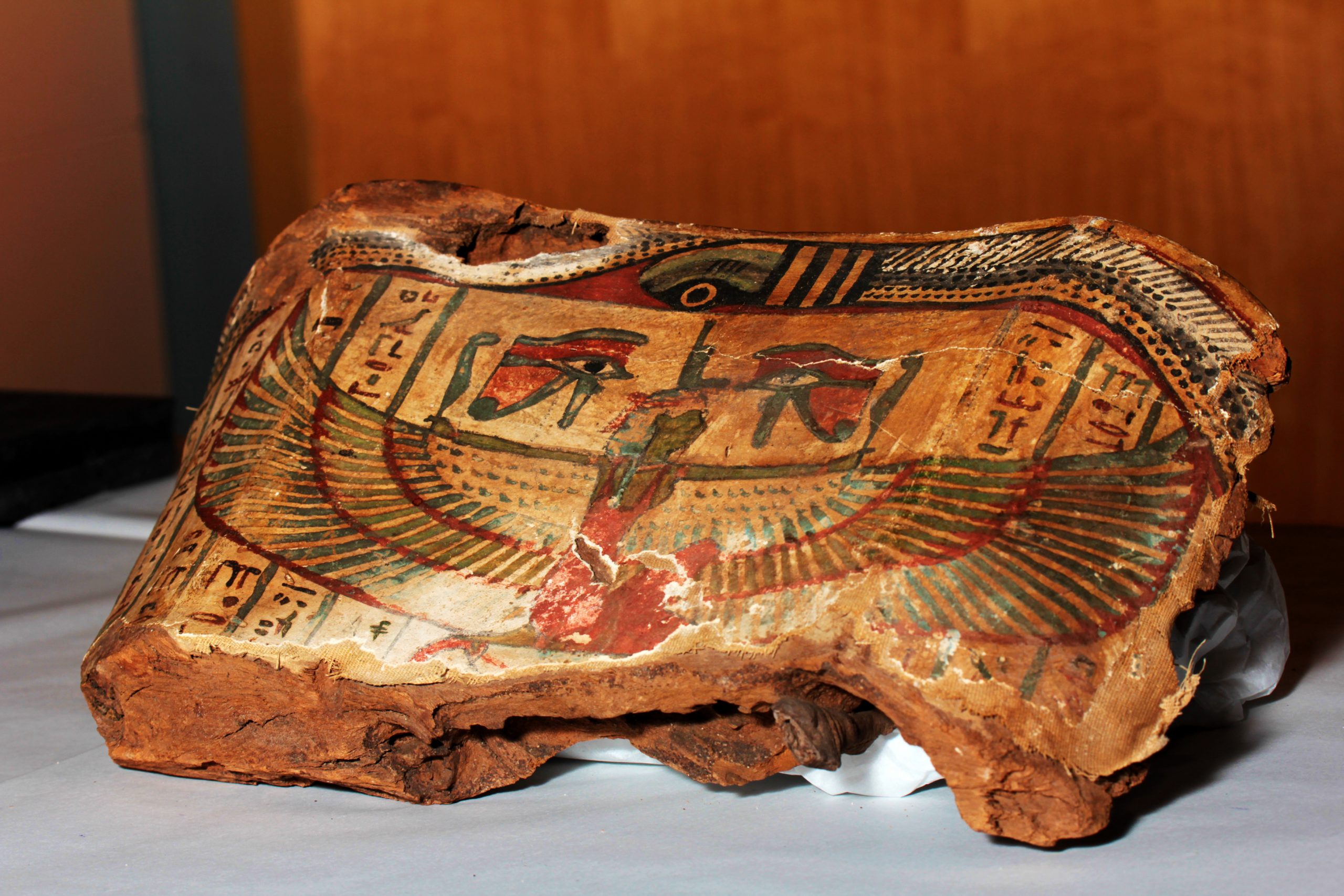
Wadjet, the goddess of Lower Egypt,
could take the form of a snake. Her counterpart was Nekhbet the goddess of Upper
Egypt and together the pair represented the unity of the two lands. They can be
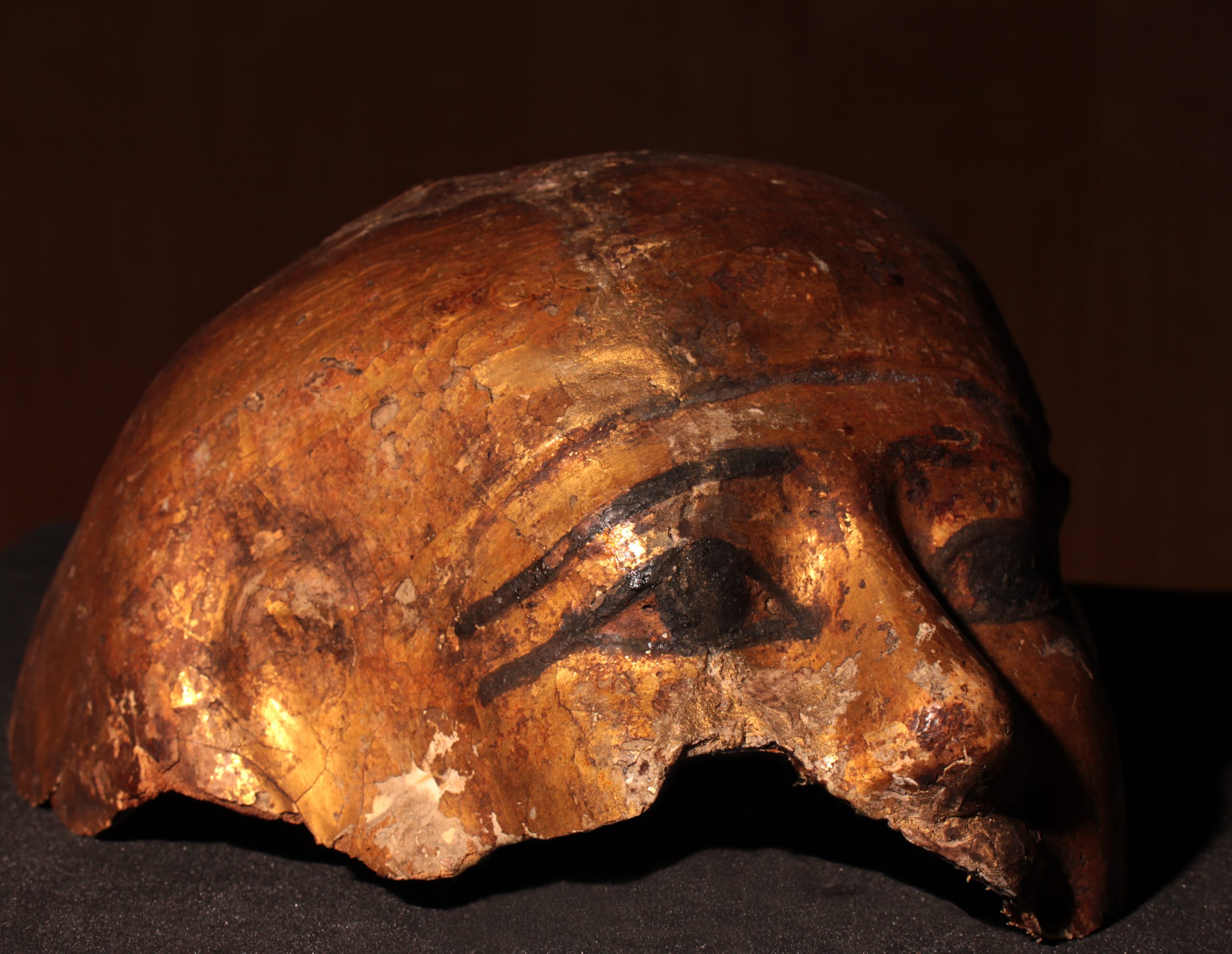
seen on coffin fragments in the Centre.
Long coiled snakes also appear on the
Egyptian game of ‘Mehen’ (copies of which can be purchased at the Egypt
Centre). The original game of mehen was
played on a spiral board in the form of a coiled snake. Examples have been found
in early Egyptian tombs, over 4000 years old. Pieces, in the form of marbles and
a lion shaped counter were moved around the board. The ancient Egyptian Book
of the Dead mentions Mehen, protector of the sun-god Re as the enemy of
death.
The cobra which appears on the forehead
of Egyptian royalty is known by Egyptologists as the ‘uraeus’. Female
goddess who were the daughters of the sun-god Re were particularly associated
with the uraeus, which was also the Eye of Re. For example, Hathor, Neith and
Isis. An example of Neith as a winged uraeus
can be seen on the 21st Dynasty Coffin in the Egypt Centre. The uraeus protected the king. Sometimes uraei are shown spitting flame or
fire, for example, in the Book of Amduat.
It is possible that Egyptian magicians
carried wands in the shape of snakes. The god of magic,
Heka, is shown carrying two snakes, one in each hand. An example of him
can be seen on the coffin of the Egyptian Priestess in the downstairs gallery.
Other objects in the Egypt Centre associated with snakes:
In the ‘Religion in the Home’ case
in Egypt Centre’s House of Death displays a cippus.
Here Horus the child holds a snake in each hand. It is believed that cippi, were
used to ward off bites of snake, among other things.
In the jewellery case a string of beads with snake's head pendants can be seen.
In the stone case you can see a snakes head from Amarna.
We have a mummified snake EC308.
Finally, on a coffin fragment in the House
of Death you can see the ouroboros, the serpent who bites his own tail as he
encircles the universe. This serpent represented resurrection and regeneration.
Further
Reading
Houlihan,
P.F. 1996. The Animal World of The
Pharaohs. London: Thames and Hudson.
Johnson, S.B. The Cobra Goddess of Ancient Egypt. London and New York: Kegan Paul
©Egypt
Centre 2005
Back To General Information On Ancient Egypt
The University | People | Life | Study | Research | Admissions.